Table of Contents
What Is a Follow Up Email After an Interview?
When to Send a Follow Up Email After an Interview
Format for a Follow Up Email After an Interview
How to Write a Follow Up Email After an Interview (Step-by-Step)
Follow Up Email After Interview Templates (By Scenario)
Common Mistakes to Avoid in Your Follow Up Email
How Cleverly's Cold Email Services Help You Master Professional Outreach
Conclusion
Frequently Asked Questions
Modified On :
November 3, 2026
Key Takeaways
- A follow up email after an interview sent within 24 hours is one of the highest-leverage, lowest-effort moves a job seeker can make — and most candidates skip it entirely.
- There are two distinct types: a thank-you email (sent within 24 hours) and a status check email (sent after no response) — knowing which one to send and when is everything.
- The format for a follow up email after an interview is simple: specific subject line, personalized opener, one callback to the conversation, brief restatement of fit, and a soft next-step ask — all under 150 words.
- Personalization is the single biggest differentiator — referencing something real from the interview is what separates a follow-up that gets a reply from one that gets ignored.
- The same principles that make interview follow up emails effective — timing, clarity, a specific ask — are the same ones that drive results in professional cold outreach.
Most candidates prep hard for interviews. They research the company, rehearse answers, pick the right outfit — and then go completely silent the moment they walk out the door.
That silence? It's costing people jobs.
68% of hiring managers and recruiters say a thank-you note affects their decision. Yet HR managers told Robert Half they get one from only 24% of applicants. That puts you ahead of most of your competition before the hiring team reviews another application.
And the wait after an interview keeps getting longer. Average time to hire is now about 41 days, up 24% from 2021, according to Gem’s 2025 recruiting benchmarks. A good follow-up keeps you top of mind while the team takes its time.
The follow-up email isn't just a formality. It's a second chance to make your case.
This guide covers everything: what a follow-up email is, exactly when to send it, the right format for a follow up email after an interview, a step-by-step writing process, ready-to-use templates for every scenario, and the mistakes that quietly kill your chances.
What Is a Follow Up Email After an Interview?
A follow up email after an interview is a short, professional message sent to the hiring manager or recruiter after your interview is done. Simple concept — but it does a lot of heavy lifting.
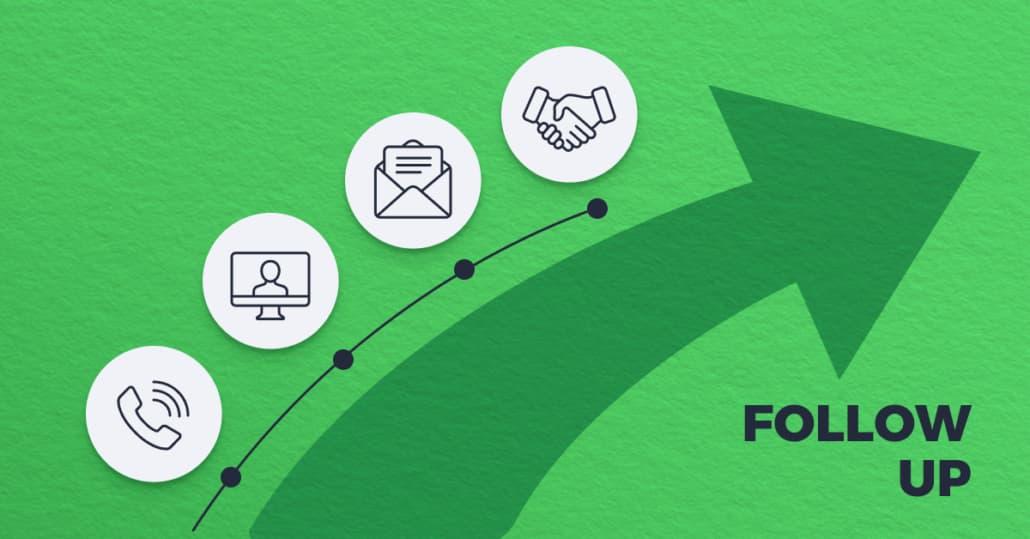
There are two main types, and they serve different purposes:
- Thank-you email — sent within 24 hours of the interview. It expresses appreciation for their time, references something specific from the conversation, and reaffirms your interest in the role.
- Status check email — sent after no response. You're politely checking in on the hiring timeline without being pushy about it.
What does a follow-up signal to a hiring manager? A few things: that you're professional, that you're genuinely interested in the role (not just job-hunting at volume), and that you pay attention to the details that most people overlook.
It's also not pushy. Hiring managers are juggling a dozen open reqs, screening calls, panel interviews, and internal approvals simultaneously. A short, well-timed follow-up doesn't annoy them — it helps them remember you exist.
Why a Follow Up Email Matters: What Happens Behind the Scenes After an Interview
A follow up email after an interview matters because it reaches the hiring team while they’re still forming opinions about you.
Most candidates think the interview ends when they leave the room. For the hiring team, the real work starts right after.
Here’s what usually happens next.
Interviewers log their feedback quickly. In most companies, each interviewer fills out a scorecard or writes notes in the hiring system soon after the conversation. Recruiters chase them for it. Those notes are written while impressions are fresh. Your email can land at the same time.
The team debriefs. Then the recruiter, the hiring manager, and the interviewers compare notes. Opinions compete. One person loved your case study. Another wanted more depth. A third barely remembers the details.
Undecided interviewers are where a gracious email helps. If everyone agrees you’re great, you don’t need an email. If everyone agrees you’re a no, an email won’t change that. The people in the middle are the ones who can be tipped.
Robert Half found that 27% of hiring managers say a thank-you note can tip the scales when candidates have equal skills and experience. And 80% of HR managers say they take thank-you messages into account when deciding who to hire.
Sending early works in your favor. Some teams debrief within days. Others take weeks. You can’t tell which one you’re dealing with. An email sent within 24 hours reaches the people before the debrief, not after it. A same-evening note is fine. Just take 15 minutes to make it specific instead of rushing a generic one.
Keep your expectations realistic. A follow-up supports your case. It doesn’t rescue it.
Think of it as a small edge. Small edges win close races, and most hiring decisions are close.
📩 Great Emails Don’t Just Follow Up—They Convert
We craft and send cold emails that get replies and book meetings. You only pay for qualified calls we deliver.
When to Send a Follow Up Email After an Interview
Timing is everything. Send too early and you look impatient. Send too late and the decision's already been made without you. Here's the timeline that works:
🕓 Within 24 hours
Send your thank-you email. This is the one that matters most. It's fresh, it's timely, and it lands while the interviewer still remembers your conversation clearly.
🕓 After 1 week:
If no response and no specific timeline was given, send a polite check-in. Keep it brief — just a reminder of who you are, which role you interviewed for, and a simple ask about next steps.
🕓 After 2 weeks
If the first follow-up also went unanswered, send a second short note. Acknowledge that hiring timelines shift, restate your interest, and make it easy for them to respond with a simple yes, no, or "we're still deciding."
🕓 After 1 month
One final, gracious close-the-loop message. This one's less about getting the job and more about leaving the door open — roles reopen, referrals happen, and the hiring manager you followed up with professionally today might be the one who calls you in six months.
One rule that overrides all of the above: if the interviewer gave you a specific timeline ("we'll be in touch by Friday"), wait until that window has passed before reaching out. Respecting their stated timeline shows you actually listened.
Format for a Follow Up Email After an Interview
Before we get into templates, let's talk structure. The format for a follow up email after an interview is the same whether you're a fresh grad or a senior director — what changes is the tone and the specific details you reference.
Here's what every follow-up should include:
Subject line: Short and specific. Include the job title or your name so it's easy to identify in a crowded inbox. Examples:
- "Follow-Up: Marketing Manager Interview — [Your Name]"
- "Thank You — [Your Name] | [Role]"
- "Re: [Job Title] Interview — Checking In"
Opening: Address the interviewer by name. Open with a genuine thank-you — not a hollow "I just wanted to reach out," but a real acknowledgment of their time.
Body: This is where most people blow it by going generic. Reference one specific thing from the interview — a challenge they mentioned, a project that came up, a skill they said they were looking for. This is the line that proves you were actually listening.
Middle: Briefly connect your background to what they need. One or two sentences max. You're not resubmitting your resume — you're making one crisp connection.
Closing: Ask a soft, low-pressure question about next steps or the decision timeline. You're not demanding an answer — you're just opening the door.
Signature: Full name, phone number, and your LinkedIn URL.
Length: Under 150 words. Shorter is better. A concise, focused follow-up reads as confident. A long one reads as anxious.
Who to Send Your Follow-Up To: Recruiter, Hiring Manager or Interview Panel
The short answer: thank-you notes go to each interviewer, and status checks go to the recruiter.
Thank-you notes go to each interviewer
Send each person their own email. Do not send one message to the whole panel.
Change the specific moment in each one. If you talked to the VP about expansion plans and the team lead about tooling, say that. Identical notes are easy to spot, and panel members compare them.
Status checks go to the recruiter
Recruiters run the process. They know the timeline, and they’re the ones who get asked the most about it. A check-in belongs in their inbox, not the hiring manager’s.
If you’ve been dealing directly with the hiring manager and never had a recruiter, send it to them.
When to CC others (and when not to)
Keep it simple.
- CC the recruiter when you email the hiring manager about status and the recruiter has been your main contact.
- Don’t CC the whole panel. It turns a personal note into a group message.
- Don’t BCC anyone. If it leaks, it looks sneaky.
- Don’t CC a recruiter on thank-yous unless that’s how they asked you to send them.
What to do when you only have one contact
Sometimes you don’t get everyone’s email address. Send one note to the person you have and ask them to share it. Add a line like this:
Please pass along my thanks to {{Name}} and {{Name}}. I enjoyed talking with them about {{topic}}.
It’s polite, it’s easy, and it gets your name in front of the full panel.
Match your greeting to how they addressed you
Look at how the interviewer wrote to you. If they signed off as “Sarah,” write “Hi Sarah.” If they wrote “Dr. Patel,” write “Dear Dr. Patel.” Match their level of formality in the greeting and the sign-off. If you never got an email from them, default to “Hi {{First Name}},” unless the company is clearly traditional.
🚀 Turn Emails Into Revenue, Not Just Vague Replies
From targeting to copy to sending—we handle everything. More replies. More meetings. Zero busywork.
How to Write a Follow Up Email After an Interview (Step-by-Step)
Now let's put it all together. Here's exactly how to write a follow up email after an interview from scratch.
Step 1 — Write a Specific Subject Line
Don't go with "Following Up" or "Thank You." Those get buried. Include the role and your name — something that makes your email instantly identifiable when the hiring manager scans their inbox three days after your interview.
Step 2 — Open with a Warm, Personalized Thank-You
Use their actual name. Write like you're talking to a real person, not filling out a form. "Hi Sarah" lands warmer than "Dear Ms. Johnson" in most hiring contexts — read the room based on how the interviewer came across.
Step 3 — Reference One Specific Moment from the Interview
This is the move that separates a good follow-up from a forgettable one. Did they mention a challenge their team is facing? A product launch coming up? A skill gap they're trying to fill? Bring it back. One sentence is enough.
Example: "I really appreciated you sharing the challenges the team is working through as you expand into enterprise accounts — it's exactly the kind of environment where my background in sales ops has made a measurable difference."
Step 4 — Reinforce Your Fit in One or Two Sentences
You're not rewriting your cover letter. Just draw one clean line between what they need and what you bring. Make it specific, not generic.
Step 5 — Express Interest Without Desperation
There's a tone difference between "I'm very excited about this opportunity" and "I'd love to keep the conversation going." Both express interest. The second one sounds more like a person, less like a form letter.
Step 6 — Close with a Soft Next-Step Ask
Something like: "Could you share a rough sense of your decision timeline? I want to make sure I'm responsive on my end." It's a real question with a practical purpose — and it gives them an easy reason to reply.
Step 7 — Proofread. Then Proofread Again.
Typos in a follow-up email undo strong interview performances. It's that simple. Read it out loud before you hit send. One careless mistake signals the opposite of what you're trying to prove.
Follow Up Email After Interview Templates (By Scenario)
We have six ready-to-use follow up emails after interview examples — each built for a different situation. These aren't copy-paste templates. They're frameworks. Swap in the specific details from your own interview and they'll feel genuine every time.
1) Thank-You Email (Within 24 Hours)
Best for: Any interview format — phone, video, or in-person.
2) Follow-Up Email After No Response (1 Week Later)
Best for: When the stated hiring timeline has passed or you haven't heard back in 5–7 business days.
3) Follow-Up After a Phone or Video Interview
Best for: After a screening call or remote interview round.
4) Second Follow-Up After 2 Weeks — Still No Response
Best for: When the first follow-up also went unanswered. This is your interview follow up email after 2 weeks.
5) Follow-Up When You Have a Competing Job Offer
Best for: When another company has extended an offer and this role is your first preference.
6) Final Follow-Up to Close the Loop (After 1 Month)
Best for: One last message before fully moving on.
Short, Detailed, Formal & Informal Follow-Up Email Templates
The six templates above are built around timing. These four are built around length and tone.
Pick based on the interview round and the company’s culture. A phone screen needs a quick thank-you. A final round deserves more.
1) Short Follow-Up Email (Phone Screens)
Best for: Quick screening calls and first-round chats.
Subject: Thank You | {{Your Name}} | {{Job Title}}
2) Detailed Follow-Up Email (In-Person or Final Rounds)
Best for: Final interviews, panel days, and roles where you met several people.
Subject: Thank You for Today | {{Your Name}} | {{Job Title}}
3) Formal Follow-Up Email (Corporate and Traditional Roles)
Best for: Banks, law firms, government, healthcare, and large corporations.
Subject: Thank You for Your Time | {{Job Title}} Interview
4) Informal Follow-Up Email (Startups and Casual Interviews)
Best for: Startups, creative teams, and interviews that felt more like a conversation.
Subject: Thanks, {{Name}}! | {{Your Name}}
Keep the casual tone honest. Informal doesn’t mean sloppy. Skip slang, emojis, and exclamation points beyond one. Proofread it like it’s formal.
The same rules show up in outbound sales: short, specific, one clear ask. If you want the B2B version, read our guide on cold email copywriting frameworks.
Common Mistakes to Avoid in Your Follow Up Email
Even strong candidates tank their chances with avoidable follow-up mistakes. Here's what to watch for when writing your follow up email after interview:
❌ Following up too soon
Sending a thank-you within minutes can feel rushed. Sending a status check a day or two later feels pushy. A thank-you the same evening is fine. A check-in should wait until the timeline they gave you has passed.
❌ Being too generic
"I enjoyed our conversation and look forward to hearing from you" tells the interviewer nothing. If your email could have been sent to any company for any role, it reads like a template — because it is one.
❌ Writing too much
Long paragraphs in a follow-up read as anxious, not enthusiastic. If your email is more than 150 words, cut it down. Every extra sentence reduces the chance they finish reading.
❌ Forgetting to proofread
A typo in your follow-up after an interview is the kind of thing hiring managers remember. Spell-check isn't enough — read it out loud before sending.
❌ Following up too many times
Two follow-ups without a response is the max. After that, you've made your interest clear. A third or fourth message crosses from persistent into uncomfortable.
❌ Misreading the tone
Overly casual language in a formal company culture — or stiff, formal language with a startup — both signal poor self-awareness. Look at how the interviewer communicated with you and match it.
❌ Not sending one at all
This is still the most common mistake. A missing follow-up isn't neutral — it can read as disinterest, especially in competitive hiring situations where another candidate did send one.
How Cleverly's Cold Email Services Help You Master Professional Outreach
Something worth naming: writing a strong follow up email after an interview and writing a high-converting cold email are more alike than most people realize. Both require the same core skills — a specific subject line, a personalized opener, a concise value statement, and one clear ask.
Get those four things right, and you'll get responses. Miss them, and you won't.
Cleverly specializes in cold email outreach for B2B companies — building and running complete outbound systems from ICP targeting and verified list building to copywriting, sequencing, and reply management. The same messaging principles that make an interview follow-up land are the ones we apply at scale across thousands of outbound campaigns.
What makes our approach different is the infrastructure behind it: multi-source verified data, tested messaging frameworks, and end-to-end execution that removes the trial-and-error most teams go through when managing cold email in-house.
Whether you're a job seeker sharpening your professional communication or a B2B company that wants qualified sales meetings without managing the outreach yourself — the fundamentals are the same.
📬 Want Expert-Level Cold Email Outreach Done For Your Business?
We run fully done-for-you cold email campaigns that have generated $312M in pipeline for 10,000+ B2B companies. You only pay for meeting-ready leads we deliver.
🔥 Book a free strategy call and see exactly how we'd approach your outbound.
Conclusion
A follow up email after an interview isn't a nice-to-have. It's one of the most underused tools in a job seeker's arsenal — and one of the easiest ways to stand out when every other candidate is staying quiet.
The formula isn't complicated: send your thank-you within 24 hours, check in after a week if you haven't heard back, and keep every message short, specific, and personal. Use the right template for the right moment. Reference something real from your conversation. And don't skip the proofread.
The candidates who get callbacks aren't always the most qualified ones. They're often just the ones who followed up thoughtfully — and didn't leave the decision up to chance.
Frequently Asked Questions
Free Resource
How to Scale a Profitable Cold Call System
Get the complete guide — download it instantly now.
Free Ebook
Download the Free Guide
Enter your details to get instant access.
You're all set! 🎉
Your ebook is downloading now.
Click below if the download didn't start automatically.